


MapChick's Isla Mujeres
Perry & Laura McFarlin
I found MapChick's Isla Mujeres most useful when I treated it as a focused island companion rather than a replacement for every travel tool on my phone. It is a free Travel & Local app built around Isla Mujeres, Mexico, and that narrow focus is its biggest advantage. Instead of asking a general map service to understand the context of a small destination, I could open one place designed specifically for visitors trying to orient themselves, plan days, and make sense of the island before and during a trip.
The app comes from Perry & Laura McFarlin and has reached over 10 thousand installs. Its average rating is 4.1 from around 36 ratings, with roughly 20 written reviews, so it has a modest but meaningful user history rather than the massive feedback base of a mainstream navigation platform. I would describe it as a practical travel guide for people who want destination-specific help, especially if they prefer preparing a loose plan before arriving instead of improvising every decision on the spot.
How I used it as an Isla Mujeres travel companion
My baseline workflow was simple: I opened the app before thinking about individual restaurants, beaches, or activities and used it to build a mental picture of the island first. That matters because a destination guide is most valuable when it reduces the feeling that every choice is disconnected. I could start with the broad layout, identify the areas that mattered to my plans, and then return to the guide when I needed to refine a day.
I would not use this app as my only source for live transport information, reservations, weather changes, or last-minute business hours. A specialist guide and a general search or map service serve different purposes. MapChick's Isla Mujeres is better suited to orientation and trip planning, while a conventional map app remains the safer companion for current directions, live traffic information, and checking whether a business is open right now.
That division of labor is one of the most useful habits I developed. I used the guide to answer, “What should I consider while I am on Isla Mujeres?” Then I used a broader service to answer, “What is happening at this exact moment?” Trying to force one app to do both jobs creates unnecessary frustration and can lead to outdated assumptions when a venue changes its schedule.
Related News

Why WhatsApp Messenger Still Makes Everyday Communication Feel Easy

Jurassic World: The Game Is the Better Dino Tycoon for Strategic Players

Threads in Real Life: Who Should Join, Lurk, or Leave

How SHEIN Turned Shopping Into an Endless Content Feed

How to Make Fortnite Feel Smarter on Mobile

Should You Switch to Microsoft Outlook on Mobile?
A realistic everyday scenario would be arriving with only part of the day available. Rather than searching the entire internet for disconnected suggestions, I would first review the guide to narrow the island experience I wanted: a relaxed outing, a sightseeing-focused route, or a day with fewer stops. After choosing a general direction, I would verify the practical details elsewhere and save the final plan in a form I could follow without repeatedly reopening several search results.
This approach also works before departure. I could browse when I had time, note the places or areas that caught my attention, and then use the app again once the trip became real. The important point is not to create an overpacked schedule. A destination guide is more useful when it helps me compare possibilities and recognize what deserves priority, rather than turning a holiday into a checklist.
What the focused format does well
The strongest quality here is concentration. The app is not trying to be a worldwide travel database, a social network, a booking service, and a full navigation replacement at once. Its subject is Isla Mujeres, which makes it easier for a visitor to stay mentally within the destination. That focus can save time for someone who is tired of generic travel pages that mix broad advice with search results unrelated to the experience they actually want.
Gallery
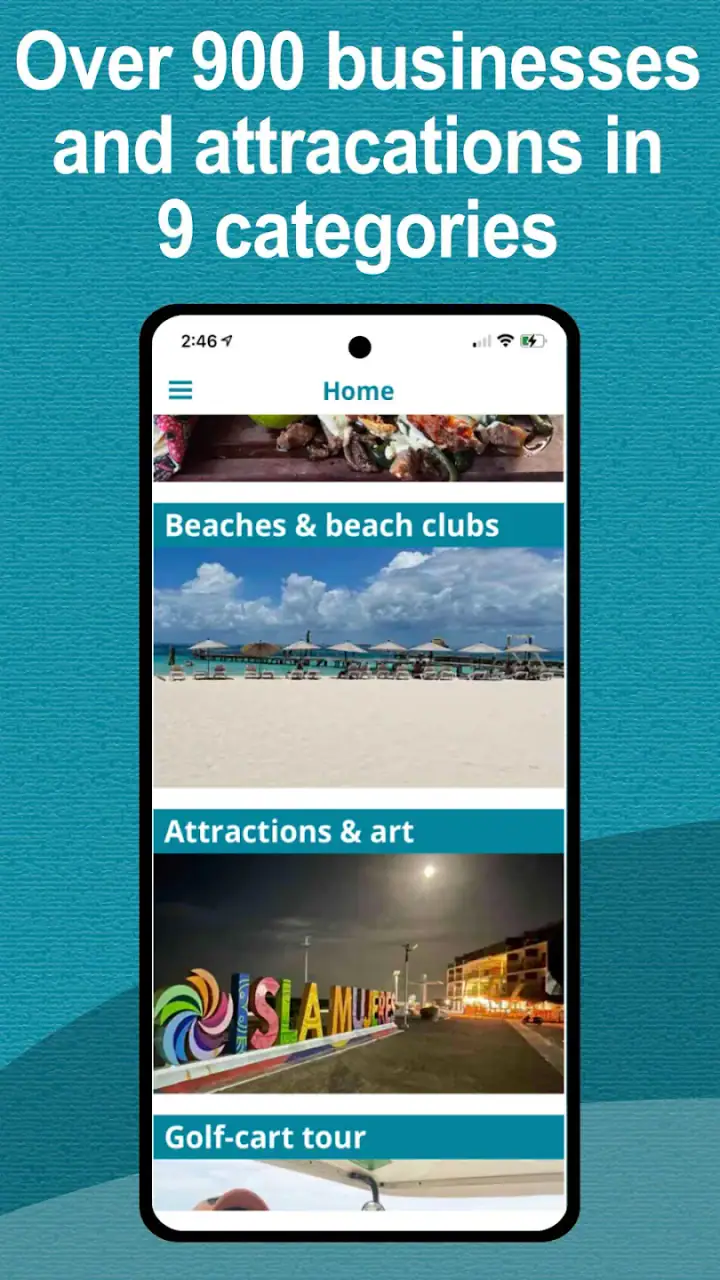
I also liked the idea of using it as a reference layer during conversations. If I were traveling with another person, we could look through the guide together and decide what fits our energy and time. That is more useful than each person separately sending links from different sources. The app gives the planning process a shared starting point, even though I would still verify changeable details before committing to them.
Another non-obvious benefit is that it can help prevent a common planning mistake: choosing activities in isolation. When I consider the island as a whole first, I am less likely to create a route that looks attractive on paper but feels inconvenient once the day begins. The guide is therefore valuable not only for discovering options, but also for deciding what not to combine.
Settings and preparation habits worth checking
There is no reason to approach this app with the same expectations as a large navigation platform. Before relying on it, I would check the device's normal app permissions and travel setup, particularly location access, mobile data, and battery use. I would only grant location access if the app's behavior makes that useful for the way I plan to use it. For simple browsing, manually exploring the guide may be enough; for location-aware use, access could be more convenient.
I would also open the app while I still have a reliable connection and review the content I expect to need. That habit is more important than assuming every travel app will behave perfectly in every location. If I am going to spend time away from dependable service, I would avoid depending on a screen I have never opened before. I would inspect the relevant sections in advance and keep essential addresses, booking details, and emergency information available separately.
The application is free to download, but it includes in-app purchases priced at $14.99 per item. That makes it worth pausing before buying anything. I would first use the free portion to decide whether the writing style, organization, and level of detail actually suit my trip. A paid item may be worthwhile for a visitor who wants deeper destination material, but I would not purchase automatically simply because the app is specialized.
This is also where the app's age rating matters. It is rated for Everyone, which makes it an uncomplicated option to consider for family trip planning. Still, an Everyone rating describes suitability of the app's content, not the safety or suitability of every real-world activity discussed in a travel guide. I would make separate decisions about children, mobility, weather, water conditions, and supervision.
The current version is 1.0.37 and the app requires Android 7.0 or later. Android users on older devices should check compatibility before building their trip around it. On a supported phone, I would update before traveling rather than waiting until I am already on the island. That is a small but sensible routine for any destination-specific app, especially one I may want to consult when I am busy, tired, or offline.
Faster patterns for planning without overplanning
My fastest repeatable pattern was a three-pass review. First, I scanned broadly to understand what kind of island day the guide could support. Second, I selected only a few priorities instead of trying to include everything. Third, I verified the practical details using a current source. This kept the app in its strongest role and prevented me from spending too much time jumping between attractive possibilities.
A second useful pattern is to plan by decision, not by destination name. Instead of asking only where to go, I would ask what I wanted from the next part of the day: a short outing, a scenic stop, food nearby, or a slower period with fewer transitions. This makes a guide more actionable because it turns information into a choice. It also helps when weather, tiredness, or delays force a change.
I would keep a short personal note outside the app with three categories: must do, nice if convenient, and skip unless conditions are ideal. That may sound basic, but it is a powerful trade-off. A destination guide can expand your options; a short list protects your time. The app works best when I use it to make that list rather than letting it become an endless browsing loop.
For couples or groups, I would take turns choosing one priority from the guide and then check whether the combination is realistic. This avoids the familiar problem where one person selects several activities and another person discovers that the day has no breathing room. The guide becomes a negotiation tool, not just a catalogue of attractions.
I would also revisit the app at two different moments: once during preparation and once after arriving. Before the trip, I am comparing possibilities. During the trip, I am filtering based on time and energy. Those are different jobs, and expecting one long planning session to solve both is inefficient. A focused guide becomes more useful when I return to it with a specific question.
Where the app reaches its limits
The main limitation is the same quality that makes it appealing: it is specialized. If I wanted broad international planning, hotel comparison, live route changes, user-generated traffic reports, or a large booking ecosystem, I would choose established general-purpose services instead. This app is not the right single tool for a complex multi-city itinerary.
I would also be careful with information that can change quickly. Travel businesses adjust schedules, prices, availability, entry rules, and operating arrangements. A guide can help me discover and organize possibilities, but I would confirm anything that affects money, timing, transport, or a nonrefundable reservation directly before leaving.
The in-app purchase model may create a second point of friction. Since individual items cost $14.99, the decision is more significant than casually unlocking a minor convenience. I would compare the paid material with my actual needs: a first-time visitor seeking structured background may see more value than someone who already knows Isla Mujeres and only wants a map or a few current recommendations.
There is also a practical difference between reading a guide and navigating a physical day. A screen can help me decide where to focus, but it cannot remove walking time, queues, heat, fatigue, or the need to adapt. I would not treat a polished plan as a promise that every transition will feel effortless. The best use is flexible: choose priorities, leave room, and verify the details that can change.
For travelers who prefer spontaneous discovery, the app may feel more structured than necessary. Someone who enjoys wandering without preparation could find enough value in occasional browsing, but may not need a dedicated guide. Conversely, a first-time visitor who feels overwhelmed by scattered recommendations is more likely to appreciate the focused approach.
Who should install it before a trip
I think it is a good fit for a visitor who is specifically going to Isla Mujeres and wants one destination-centered place to begin planning. It is especially appealing if you like to compare options calmly, travel with another person, or build a flexible outline before arrival. Families may appreciate having a shared reference, while independent travelers can use it to narrow choices without reading dozens of unrelated pages.
I would be more hesitant to recommend it to someone who needs live navigation above all else, expects comprehensive booking tools, or is visiting many destinations in one journey. That person will get more from a mainstream map and travel platform, with this app used only as a supplementary local guide if desired.
It is also worth considering how much research you enjoy. The app can reduce the effort of finding island-specific ideas, but it does not eliminate the need for judgment. I would still check current logistics, decide what matches my budget and energy, and keep a backup plan. The best experience comes from combining its destination focus with ordinary travel common sense.
Because the app is free to start, I would install it before the trip, browse the available material, and decide from actual use whether any $14.99 purchase fits my plans. That is a better approach than judging the paid option in the abstract. If the free experience already gives me enough orientation, I can keep using it alongside other tools without spending more.
My verdict after making it part of a repeatable travel routine
MapChick's Isla Mujeres is a focused travel app with a clear purpose: helping visitors think about one Mexican island as a destination rather than as a pile of disconnected search results. I found its greatest value in the planning stage and in those small moments when I needed to reset the day's direction. It encouraged better choices when I used it for context, then switched to current sources for details that could change.
The app is free, rated for Everyone, and available for Android devices running version 7.0 or newer. With a 4.1 average and over 10 thousand installs, it has enough public use to make it a reasonable option to try, while its relatively small review base suggests I should form my own opinion rather than assume it suits every traveler.
My practical recommendation is to use it as the island-specific planning layer, not as your entire travel system. Open it early, check the sections relevant to your trip, build a short priority list, verify live details elsewhere, and leave room to adapt. That workflow makes the app feel purposeful instead of redundant.
I would recommend it to first-time Isla Mujeres visitors who value preparation and want a specialized guide in their pocket. I would skip it as a primary tool if my trip required live navigation, broad booking functions, or extensive multi-destination management. Used within its proper limits, though, it offers a sensible way to turn scattered curiosity into a more manageable island plan, and that is enough to make it worth trying before departure.
FAQs for MapChick's Isla Mujeres
What is MapChick’s Isla Mujeres, and what can I use it for?
MapChick’s Isla Mujeres is a travel and local guide designed to help visitors explore Isla Mujeres, Mexico. It can be useful for finding beaches, restaurants, hotels, attractions, activities, transportation information, and other points of interest. The app is especially helpful when planning an itinerary or looking for recommendations while already on the island, although the usefulness of individual listings may depend on how recently the content has been updated.
Does MapChick’s Isla Mujeres work without an internet connection?
Offline availability is an important consideration before downloading MapChick’s Isla Mujeres. Some guide content may remain accessible after it has loaded, but interactive maps, updated business information, directions, links, and external content may require mobile data or Wi-Fi. Before traveling, open the sections you expect to use and, where possible, save important addresses and details separately in case coverage is limited or roaming costs are high.
Is MapChick’s Isla Mujeres free to download and use?
The availability, price, and included features of MapChick’s Isla Mujeres can vary according to the platform and the developer’s current distribution model. Check the Google Play Store or Apple App Store listing before installing to confirm whether the app is free, includes advertising, offers in-app purchases, or requires payment for premium content. Reviewing the store description and permissions is also recommended before completing the download.
Can I use the app to find current restaurant, hotel, and activity information?
MapChick’s Isla Mujeres can serve as a convenient starting point for discovering restaurants, accommodations, tours, beaches, and activities, but travelers should not assume that every listing is completely current. Opening hours, prices, availability, contact details, and business policies can change frequently, particularly during high season. For reservations or time-sensitive plans, use the app’s information alongside the business’s official website, social media page, or direct phone confirmation.
What should I know about privacy, permissions, and device compatibility?
Before installing MapChick’s Isla Mujeres, review its current store listing to see which Android or iOS versions are supported and what permissions the app requests. A travel guide may ask for location access to show nearby places or provide map-related features, but you can usually control this through your device settings. Also check the developer’s privacy information and make sure your phone has enough storage and an updated operating system.
Pros
- Offline maps help when mobile signal is weak or unavailable.
- Highlights beaches
- restaurants
- shops
- and local points of interest.
- Useful for planning routes before exploring the island.
- Simple interface is easy to use while traveling.
- Can reduce reliance on roaming data and constant internet access.
Cons
- Coverage may be limited outside the main tourist areas.
- Some listings or map details may become outdated.
- Navigation features may be less advanced than major map apps.
- Offline content can require storage space on your device.
- Limited usefulness if you are not visiting Isla Mujeres.


